
- News
- Sports News
- When athletes have to battle the demons of the mind
Trending
This story is from April 20, 2020
When athletes have to battle the demons of the mind
Top athletes lead intensely competitive, highly regimented lives in which every waking moment is geared towards tuning one's mind and body for sporting excellence. So when there is no sport, no discipline and no training, they can be vulnerable to mental-health issues. TOI talks to top sports psychologists about how to tackle creeping doubt and depression in such times...
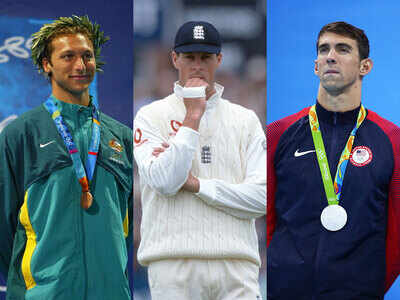
Ian Thorpe, Marcus Trescothick and Michael Phelps. (Getty Images)
CHENNAI: With the Tokyo Olympics pushed back by a year due to the coronavirus outbreak, many athletes across the globe have suffered a huge mental blow.
Their immediate dream of representing their country in the world's biggest sporting event has come to a screeching halt, virtually putting their lives in limbo.
To make matters worse, these ultra-competitive athletes, who usually lead strict, regimented lives, don't know how long the quarantine period will last, when international sport will eventually resume and what lies in store for their careers going forward.
According to renowned sports psychologist Mrinal Chakraborty, who has worked closely with the Indian hockey team and dozens of international athletes, a prolonged embargo on athletes' competitive daily lives can affect their mental well-being.

"It's an emergency and there are many things which are beyond you. So, controlling the controllables is important here. We're used to a certain pattern of life that has changed now," Chakraborty, who has been working with the Indian Olympics Association (IOA), told TOI. "You need to quickly shift and re-pattern your mind. It's like a mobile app…install it when you need and uninstall when you don't.
"It's important to continue with the same habit during this crisis or else an athlete's life can be ruined. I am live on Facebook at 5.55 am every day to connect with my students, so that they don't change their habits. I give them tasks and get feedback at 5 pm. It's been going smoothly and players have benefitted a lot," the Kolkata-based psychologist said.
Some top athletes seem to exhibit great mental strength, performing consistently well in front of packed galleries day in and day out. In reality, though, they are no less vulnerable to mental health problems.
"Do you remember Olympic swimming champions Michael Phelps and Ian Thorpe, or cricketer Marcus Trescothick? All of them had issues. They were top performers but couldn't manage their mental well-being. Some of them came back stronger after going through proper counselling," said Karanbir Singh, who is associated with the high-performance centre at the Tata Steel sports department.
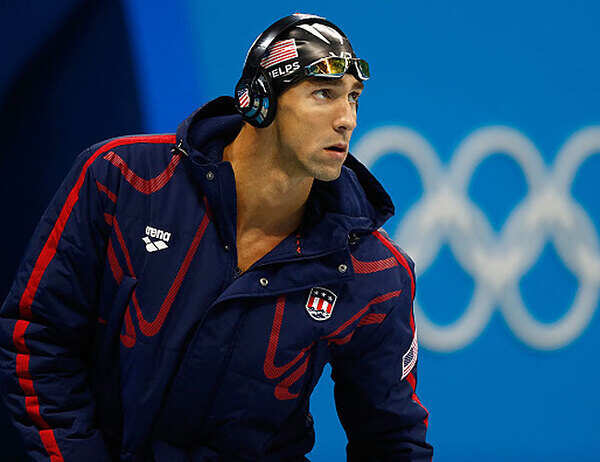
STRUGGLING THROUGH THE HIGHS: Swim legend Michael Phelps has been vocal about his bouts with depression and anxiety. (Getty Images)
According to Chennai-based sports psychologist Keerthana Swaminathan, being innovative during this period can help an athlete stay mentally fit and motivated.
"I've come across many cases where players have reinvented themselves, developed new skills in painting, drawing, singing or playing musical instruments.
"It's a very good option to stay mentally positive until they get back on track," Keerthana, who has been working with the Raman High Performance TT Centre, said.
Experts feel that during this prolonged isolation. There is a big possibility that many sportspersons will tend to catastrophize.
This is a mental state in which a person views a situation as considerably worse than it actually is. "Overthinking a situation which is beyond your control can only aggravate the problem. It's better to stay in the present and wait till normalcy is restored," Chakraborty added.
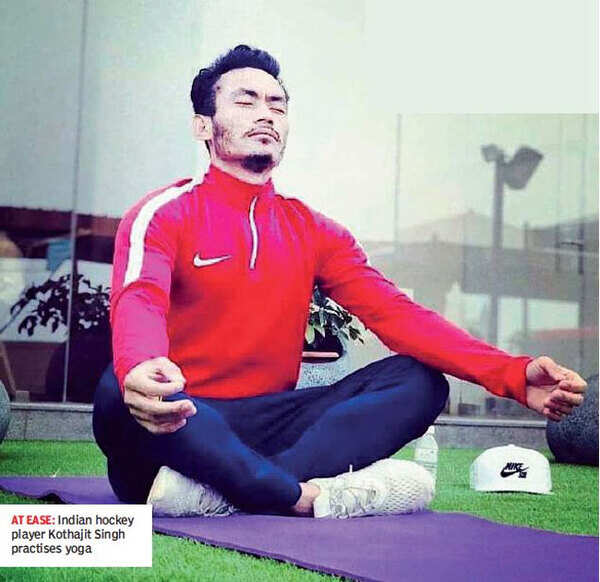
Total relaxation of body and mind play critical roles in staving off mental issues like depression and anxiety, and guidance from a yoga expert can be of huge help. "If you can make a good combination of five sense organs, it can create a peaceful mind. It's a time of crisis and the emotional quotient is very high. Keeping your mind relaxed is important," K Gopinath, who has been associated with MRF Pace Foundation for over a decade and also worked with the likes of Sachin Tendulkar and Narain Karthikeyan, said.
According to Gopinath, there are plenty of yoga asanas which can help fight stress and anxiety. "Tough times don't last, but tough people do," he said.
Their immediate dream of representing their country in the world's biggest sporting event has come to a screeching halt, virtually putting their lives in limbo.
To make matters worse, these ultra-competitive athletes, who usually lead strict, regimented lives, don't know how long the quarantine period will last, when international sport will eventually resume and what lies in store for their careers going forward.
According to renowned sports psychologist Mrinal Chakraborty, who has worked closely with the Indian hockey team and dozens of international athletes, a prolonged embargo on athletes' competitive daily lives can affect their mental well-being.
"It's an emergency and there are many things which are beyond you. So, controlling the controllables is important here. We're used to a certain pattern of life that has changed now," Chakraborty, who has been working with the Indian Olympics Association (IOA), told TOI. "You need to quickly shift and re-pattern your mind. It's like a mobile app…install it when you need and uninstall when you don't.
"It's important to continue with the same habit during this crisis or else an athlete's life can be ruined. I am live on Facebook at 5.55 am every day to connect with my students, so that they don't change their habits. I give them tasks and get feedback at 5 pm. It's been going smoothly and players have benefitted a lot," the Kolkata-based psychologist said.
Some top athletes seem to exhibit great mental strength, performing consistently well in front of packed galleries day in and day out. In reality, though, they are no less vulnerable to mental health problems.
"Do you remember Olympic swimming champions Michael Phelps and Ian Thorpe, or cricketer Marcus Trescothick? All of them had issues. They were top performers but couldn't manage their mental well-being. Some of them came back stronger after going through proper counselling," said Karanbir Singh, who is associated with the high-performance centre at the Tata Steel sports department.
According to Chennai-based sports psychologist Keerthana Swaminathan, being innovative during this period can help an athlete stay mentally fit and motivated.
"I've come across many cases where players have reinvented themselves, developed new skills in painting, drawing, singing or playing musical instruments.
"It's a very good option to stay mentally positive until they get back on track," Keerthana, who has been working with the Raman High Performance TT Centre, said.
Experts feel that during this prolonged isolation. There is a big possibility that many sportspersons will tend to catastrophize.
This is a mental state in which a person views a situation as considerably worse than it actually is. "Overthinking a situation which is beyond your control can only aggravate the problem. It's better to stay in the present and wait till normalcy is restored," Chakraborty added.
Total relaxation of body and mind play critical roles in staving off mental issues like depression and anxiety, and guidance from a yoga expert can be of huge help. "If you can make a good combination of five sense organs, it can create a peaceful mind. It's a time of crisis and the emotional quotient is very high. Keeping your mind relaxed is important," K Gopinath, who has been associated with MRF Pace Foundation for over a decade and also worked with the likes of Sachin Tendulkar and Narain Karthikeyan, said.
According to Gopinath, there are plenty of yoga asanas which can help fight stress and anxiety. "Tough times don't last, but tough people do," he said.
End of Article
FOLLOW US ON SOCIAL MEDIA






Top Sports News
TOP TRENDING
Trending Stories
In Sports
Entire Website
- Cristiano Ronaldo misses Al-Nassr's debut in new Asian Elite tournament due to viral infection
- 'They could be knocked down ... ': Sunil Gavaskar warns Rohit Sharma-led Team India against Bangladesh
- Travis Kelce Net Worth 2024
- "Miami Dolphins Owner Stephen Ross Eyes Multi-Billion Dollar Deal: The $7 Billion Power Play"
- Shannon Sharpe's Net Worth 2024, His Jaw-Dropping Income, Personal Life and More
- The Secret Behind NFL Marriages: How These Couples Make It Work
- Famous NFL Superstars Who Are Friends Of Taylor Swift
- Top 10 EDM Artists Who Deserves A Chance To Perform At Super Bowl: Skrillex, DJ Snake and More
- Bo Nix’s Tough Debut: Rookie QB Left Scrambling Without Support, Says Schlereth
- Asian Champions Trophy Semi-Final Live, India vs Korea: A spot in the final beckons India
- Kolkata police commissioner, two health officials removed after Mamata's meeting with docs
- BAPS swaminarayan temple vandalised in New York; 'unacceptable', says Indian consulate
- Cow vigilantes killing a Brahmin is the wake-up call India needed
- Modi govt will bury bid to revive 90s-like terrorism in J&K: Amit Shah
- 'Look at own record': India condemns remarks by Iran's Supreme Leader Khamenei
- Attempt to derail Delhi bound Swatantrata Senani Express
- Will Atishi replace Arvind Kejriwal as Delhi CM?
- Apple's biggest 'iPhone update' for year 2024 rollout starts today
- Watch: BJP MLA falls on rly tracks while flagging off Vande Bharat train
- UPS vs NPS Calculator: Switch a no-brainer? Not really! Check top points

Popular Categories
Hot on the Web
Top Trends
Prince HarryWho is Ryan RouthUPI Transaction LimitArvind Kejriwal ResignationNEET UG Admission CriteriaKolkata Doctor Rape CaseUS Presidential ElectionsRohit SharmaSports Stars Turned Power CouplesIBPS RRB Clark PO ResultDonald TrumpCristiano RonaldoIndia vs Korea HighlightsBMW Accident Madhya PradeshUPS vs NPS CalculatorMiami Dolphins OwnerLive Cricket Score
Trending Topics
Living and entertainment
Latest News
Vempalle Shareef's story is now a lesson for degree students in Andhra PradeshGovt launches programme to tackle glacial lake outburst flood threat in Himalayas, all 190 high-risk lakes to be monitoredKhatron Ke Khiladi 14: Shalin Bhanot hosts a fun party for his co-contestants Krishna Shroff, Abhishek Kumar, KaranVeer Mehra and othersAstrological Influence on Zodiac Signs' Career ChoicesBike rally held to raise voter awareness in Jammu and Kashmir's Doda ahead of assembly electionsFalcons' Predictable Offense and Cousins' Prime-Time Woes Spell Trouble in PhiladelphiaTaurus, Daily Horoscope Today, September 17, 2024: Anxiety and stress diminishLiza Colon becomes 1st Latina to win Best Supporting Emmy Award'Oh no!': Hilarious goof-up leads to missed catch, leaves bowler in smile. WatchJr NTR on shooting under water scene for 35 days in 'Devara Part 1': It is an important sequence!Top NFL Superstars Who Are Vegan: Derrick Morgan, David Carter, Theo Riddick and moreKSCA Invitational: Arjun Tendulkar takes match haul of 9 wickets in big Goa CA XI winAbhishek Kumar shares selfies with Alia Bhatt; recalls the time when he worked as a crowd artist in ‘Humpty Sharma Ki Dulhaniya’Shocking! Man celebrates birthday by lying among massive PythonsSohum Shah says 'Tumbbad 2' will be different from 'Munjya' and 'Stree 2': 'They are not making dadi-nani ki kahaniyaan'1031 candidates to contest Haryana Assembly Elections to be held on October 5: CEO J AgarwalSathiyan set to partner Sreeja in mixed doublesHere's why multiple WWE Hall of Famers refused to team up with Kevin Owens on SmackDown
Copyright © 2024 Bennett, Coleman & Co. Ltd. All rights reserved. For reprint rights: Times Syndication Service